
LLM Ads for SaaS
ChatGPT Visibility Audit
See how ChatGPT describes your SaaS category, competitors, alternatives, and product fit.
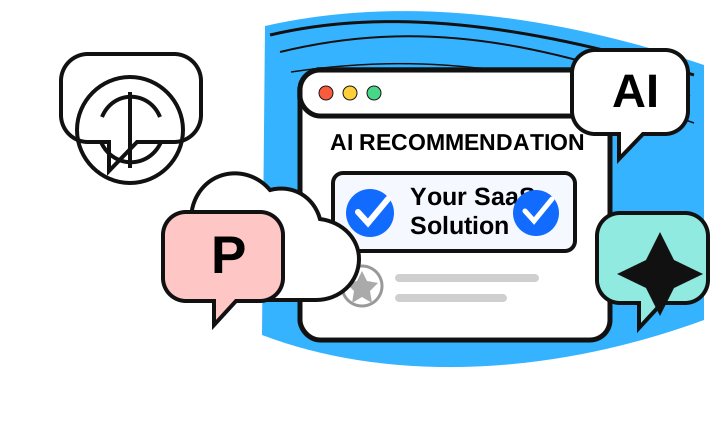
A ChatGPT visibility audit tests category prompts, competitor prompts, alternative prompts, problem-aware prompts, and buying-stage prompts. The goal is to understand whether ChatGPT can accurately explain your product and when it chooses to mention your competitors instead.
This is not the main focus of the platform ad pages, but it remains a useful first step for SaaS companies that want to prepare for ChatGPT ads and recommendation-driven discovery.
Why SaaS companies need this now
SaaS buyers are using AI assistants to reduce uncertainty. They ask for shortlists, alternatives, implementation risks, integration advice, pricing considerations, and vendor comparisons. That behavior changes how paid acquisition should be planned. The first impression may no longer happen on a landing page. It may happen inside an AI-generated answer.
For paid media teams, this means campaign planning has to include the assistant layer. Your ads, landing pages, category content, comparison pages, and proof points should all support the same answer: why your SaaS belongs on the buyer’s shortlist.
What the engagement covers
Market and prompt research
We map how buyers ask about the category, what comparisons they make, and which moments are most likely to influence pipeline.
Paid acquisition plan
We identify which AI-adjacent channels deserve attention now and which should remain on a watch list.
Measurement structure
We define practical reporting for AI referrals, assisted conversions, branded lift, source quality, and CRM follow-up.
What you get
- A SaaS-specific strategy document, not a generic AI marketing checklist.
- Platform recommendations for ChatGPT, Gemini, Perplexity, Claude, Anthropic, Google AI experiences, and adjacent paid channels.
- Landing page and content recommendations that support paid campaigns.
- A 30/60/90 day roadmap with clear priorities and realistic assumptions.
- Guidance on where to spend, where not to spend, and what to monitor.