
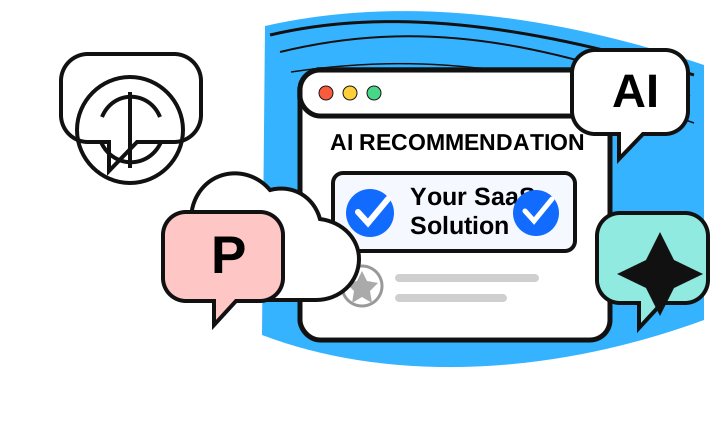
CRM, customer support, project management, cybersecurity, HR software, martech, fintech infrastructure, developer tools, and analytics platforms can all benefit because buyers already ask AI assistants to explain tradeoffs and shortlist vendors.
The SaaS paid acquisition context
SaaS acquisition is already expensive. Search auctions are competitive, LinkedIn CPMs can be high, and buyers rarely convert from a single touch. AI discovery adds a new behavior layer: buyers can ask assistants to narrow the market before they ever click an ad. That makes visibility inside AI-generated recommendation moments commercially important.
The right response is not to abandon proven channels. It is to adapt the system. Paid search, paid social, retargeting, content, comparison pages, product-led growth, and sales follow-up all need to account for AI-assisted research.
What changes with LLM ads
- The query is often conversational, not a keyword.
- The user may want a recommendation, not a list of links.
- The answer may mention competitors before the user visits any website.
- Proof and source quality matter because assistants need evidence to explain recommendations.
- Measurement has to include direct, assisted, and delayed effects.
A practical framework
- Map the prompts. Identify category, competitor, alternative, pricing, integration, security, and implementation questions.
- Check the current answer. See whether assistants mention your brand, misdescribe it, omit it, or favor competitors.
- Build the proof layer. Improve pages, documentation, comparisons, reviews, integrations, and third-party references.
- Prepare paid tests. Create platform-specific campaign angles and landing pages for available or emerging ad inventory.
- Measure beyond last click. Track referrals, UTMs, CRM notes, self-reported attribution, branded demand, and pipeline quality.
What SaaS teams should avoid
Avoid treating LLM ads as a magic replacement for Google Ads or LinkedIn Ads. Avoid vague AI marketing packages that do not explain platform availability, measurement, or paid media mechanics. Avoid building content only for bots while ignoring human buyers. The strongest pages help both: they are useful to the assistant because they are clear, and useful to the buyer because they answer real evaluation questions.
Next step
Start with one category, one buyer segment, and one platform. Define the prompts that matter. Review the current AI answer. Build the landing path. Then decide whether paid AI inventory, Google AI search placements, or adjacent paid channels deserve budget.